


By Isa Cacciavillani
YBOR CITY — Florida state Rep. Angie Nixon urged working people to organize and take political action as she campaigned for the U.S. Senate during an Oct. 17 rally at the Cuban Club Courtyard. She campaigned with Sen. Bernie Sanders, who focused on economic inequality and the influence of wealthy interests in American politics.
A crowd of around 2,000 people took cover under unbrellas and ponchos. The rain did not stop Nixon, Sanders, or any of the other speakers from delivering their messages.
“We do not have time to sit around waiting for someone else to save us,” Nixon told the crowd, calling on supporters to knock on doors, make phone calls, speak with friends and neighbors and help others make a plan to vote.
Nixon framed her campaign around the financial pressures facing working families, including rising grocery, housing, insurance and health care costs. She said that wages have not kept pace with those expenses and that government should prioritize the people who work and live in Florida rather than wealthy donors and powerful corporations.
“I know what it means to work hard and to struggle to pay your bills,” Nixon said, drawing on her experiences as a former single mother, small-business owner and union organizer. She said she entered public service to improve conditions for working families and outlined priorities including higher wages, public education and expanded access to health care.
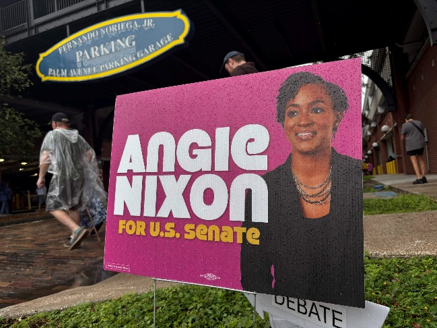
Nixon also urged attendees to do more than support her campaign from the audience. She encouraged them to volunteer, contact voters and talk with people in their communities. Her message made organizing a central part of her remarks, presenting the election as an opportunity for working people to influence government.
Sanders, an independent U.S. senator from Vermont, endorsed Nixon and said her primary campaign had built a grassroots movement despite limited establishment support. He said that economic inequality and campaign financing have given wealthy people disproportionate influence over public policy.
“You are living in a rigged economy where the people on top are doing phenomenally well, while 60 percent of our people are living paycheck to paycheck,” Sanders said. He said that the country should build an economy that benefits working people broadly rather than concentrating wealth among the richest Americans.
Sanders also criticized the role of large political donors and called for changes to campaign finance rules. He connected economic inequality to health care costs, housing affordability and government spending, arguing that public resources should address people’s basic needs.
The two speakers shared a focus on working-class concerns, though they approached the issue from different perspectives. Nixon emphasized her own campaign and the need for supporters to organize locally, while Sanders placed her candidacy within a broader argument about wealth, political influence and national policy.
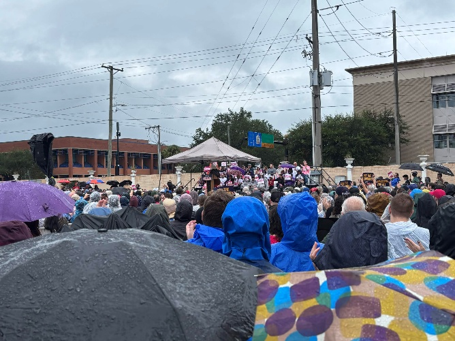
Stephanie Yokum, president of the West Central Florida Labor Council and a teacher for 18 years, also spoke in support of Nixon. Yokum connected economic pressures to public education, saying that many school employees face low pay while costs for housing and health care rise. She argued that underfunded schools and unstable public funding ultimately affect students.
Yokum urged the audience to support Nixon, describing the election as a choice about whether the economy would serve only wealthy people or create more opportunity for working families.
She ended with a labor movement chant: “When we fight, we win!”
Across the speeches, the speakers returned to the idea that political change requires participation from people affected by economic decisions. Nixon’s asked supporters to turn their agreement into action through volunteering and conversations with voters.
Reporter Isa Cacciavillani is a journalism student in the Beginning Reporting class at USF’s Mass Communications school in Tampa.